





Tuesday, June 29, 2010

Celebrating the life of St Anne - Week 5

I hope many ladies can join with me every Tuesday in celebrating the life and cult of St Anne throughout the history of the Church leading up to her feastday on the 26th of July. This is a nine week posting of a beautiful article published in the Catholic newspaper called, Catholic ~ The Voice of Catholic Orthodoxy the article itself is is an exerpt from a book by Rev Fr Myles V Ronan CC, MRIA 1927.

Edit 2011: I have since discovered that the wonderful newspaper that this St Anne article has come from, is put out by the Transalpine Redemptorists on the island of Papa Stronsay in Scotland. I now have their blog linked at the top of my lefthand sidebar, you can order this newspaper/magazine from their site.

Today is week three, here are the previous three postings:

Week 4

During these nine weeks I am also giving away a St Anne gift for each posting (either a St Anne chaplet, rosary or necklace of heirloom quality.) To enter the draw, read the day's posting and answer the question taken from the St Anne story.
Then email me the answer with your name and email address written beside it, if the name and email address is not there, I cannot add you to the draw. I will draw out and announce the winner the following Tuesday and release the photo of the next gift and question and on it goes! Feel free to enter each week's draw.

I ask just one special favour, if you could offer an Ave in honour of St Anne for my sister Carmen who would dearly love to be blessed with a child after nine years of infertility, many grateful thanks.

And so we continue on from last week.....

IN A FIELD CALLED BOCENNO

In the 17th century Keranna was a group of small houses covered with thatch, surrounded by some tilled fields and meadows. Eight people lived in the village, one of whom was a priest, and another was Yves Nicolazic.

They were all just comfortable people as far as this world's goods were concerned. At this time Yves Nicolazic was 40 years of age; was married 12 years, and had no family. He was a man of good intelligence, of exemplary life, humble and respectful, and respected by all. He had a warm devotion to the Blessed Virgin, and not only said the Rosary every day but carried his beads about with him in his hands. He used to say that it was an excellent means of being inspired with holy thoughts and of being filled with the spirit of God. But the chief characteristic of his piety was his devotion to St Anne whom he called the Good Mistress.

He had a great respect for the place where the ancient chapel had been and used often to retire there to pray: No one considered him a saint; he was just a good Christian, and remarkable among the people of the place for his exemplary piety and sound common sense.

One night, early in August 1623, as he was as usual thinking of his Good Mistress, his room was suddenly illuminated by a bright light, and he distinctly saw a hand holding a wax torch. This vision lasted while he recited two Paters and Aves. Six weeks later, on a Sunday, an hour after sunset, he saw the same spectacle in the Bocenno field; the same torch suspended in mid-air, but no hand. For fifteen months the same torch continued to shine around him, at different times of the day and in different places. He was not the only witness of this phenomenon.


Above: First apparition of St Anne to Nicolazic.

He was at first somewhat frightened, not knowing what to think of the strange occurrences, but later he began to feel in his heart a certain happiness. One summer's evening, as he and his brother-in-law went to a field near the ancient fountain to round up the cows and bring them home, the beasts became terrified and refused to move. Looking around for the cause of this, the two men saw an extraordinary spectacle. There was a majestic lady, standing and turned towards the fountain, with the grave and tender look of a mother. The first impulse of the two men was to flee, but soon enraptured with the sight, they drew nearer.

Afterwards he saw her frequently and in different places, sometimes near the fountain, sometimes in the house, the barn, etc. Nicolazi thought it might be the soul of his mother, who was not long dead, coming to ask his prayers. And to dispel his doubts he related his story to a Capuchin of Auray, Fr Modeste. The latter advised him to pray more and to visit the two sanctuaries of Auray to find out what God required of him.

On 25 July, the eve of the feast of St Anne, he went to Auray to confession, as he always received Holy Communion on Sundays and holidays. At this time the feast of St Anne was a holiday of obligation in Brittany. Returning to the village, with his beads in his hands, he passed by the old Cross. It was night and the Mysterious Lady suddenly appeared as on former occasions. But this time she spoke. She called him by name and sweetly bade him have no fear. Then she proceeded towards the village carrying a torch in her hand and Nicolazic walked beside her to the houses, still reciting the Rosary. When they came to his farm she suddenly disappeared.

So far, no apparition had lasted so long as this. Nicolazic was profoundly impressed, and making an excuse to his wife that he had to go to the barn to guard the grain that had been threshed on the preceding days, he threw himself on some straw in the barn, but could not sleep. It is to be noted that the walls of this barn had been built with the stones of the ancient chapel of St Anne in the Bocenno field.

"I AM ANNE"

Above: Madame Saint Anne d'Auray, Protectress of the Faitha nd Language of the Bretons.

Restless, he began to recite the Rosary, when suddenly, about 11 o'clock, he heard a strange noise on the road near the barn as of a great crowd marching along. Curious to see what it was all about, he went out, but could see no one; the whole village was peaceful. He was stupefied, but taking courage in his devotion to St Anne, he again began to say his Rosary. Suddenly a bright light filled the barn, and the Lady, more resplendent than ever appeared.

At first he was terrified, but soon was at ease, for the Apparition spoke to him: "Yves Nicolazic, be not afraid. I am Anne, Mother of Mary. Tell your Rector that in the field called Bocenno, there was formerly, even before there was any village, a chapel dedicated to my name. It was the first in the whole country. It is now 924 years and 6 months since it fell into ruins. I wish that it be rebuilt as soon as possible, and that you see to it, for God wishes that I be honoured there."

It was not enought to receive a mission; it had to be approved by the Church; but the good parish priest rejected Nicolazic's claims as fantasy. This threw him into a crisis which lasted for seven weeks, when at last, St Anne was to put an end to his doubts and sufferings: "Be consoled, Nicolazic," she said, "the hour will soon come when what I have told you will be accomplished."

The voice of the Saint was so sweet and motherly that he was greatly consoled, and in all simplicity, he cried out: "My God, my Good Mistress, you know the difficulties that our Rector places before me, and the shameful reproaches he had made to me when I spoke to him on your behalf. I have not sufficient means to build a chapel, though I am willing to devote all I have to it. Who will believe me when I say that there was formerly a chapel in the Bocenno field, since there is not a trace of it? But I am ready to do all that you require of me."

"Do not be troubled, my good Nicolazic; I will give the wherewith to begin the work, and nothing will be wanting to accomplish it. I assure you that God being well served there, I shall abundantly provide what will be necessary not only to finish it, but also to accomplish many other things that will astonish everybody. Do not fear to undertake it as soon as possible."

On many other occasions afterwards she appeared to him saying: "I have chosen this place willingly to be honoured here." And again: "All the treasures of Heaven are in my hands."

To be continued next week...

Last week's question was: From time immemorial the Bretons had honoured St Anne at two places, what is the names of these two places? The answer: Palud and St Anne d'Auray.

Becky Ciresi was the first name out of the hat with the correct answer ~ congratulations! Email me with your address Becky, and I'll post the St Anne chaplet you see above to you!

For all those ladies who entered last week's draw, feel free to answer this week's draw, answering the new question below.

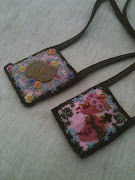
Here is an image of this week's St Anne chaplet:

To have a chance to win this week's heirloom quality St Anne chaplet made from gemstones, swarovski crystals and a solid bronze vintage reproduction St Anne d'Auray medal answer the following question:

Q: What was the name of the Capuchin priest in Auray that Nicolazic spoke to?

Email me the answer with your name and email address written next to the answer. Come back next Tuesday to see if you have won!



Tuesday, June 22, 2010

Celebrating the life of St Anne - Week 4

I hope many ladies can join with me every Tuesday in celebrating the life and cult of St Anne throughout the history of the Church leading up to her feastday on the 26th of July. This is a nine week posting of a beautiful article published in the Catholic newspaper called, Catholic ~ The Voice of Catholic Orthodoxy the article itself is is an exerpt from a book by Rev Fr Myles V Ronan CC, MRIA 1927.

Edit 2011: I have since discovered that the wonderful newspaper that this St Anne article has come from, is put out by the Transalpine Redemptorists on the island of Papa Stronsay in Scotland. I now have their blog linked at the top of my lefthand sidebar, you can order this newspaper/magazine from their site.

Today is week three, here are the previous three postings:

Week 3

During these nine weeks I am also giving away a St Anne gift for each posting (either a St Anne chaplet, rosary or necklace of heirloom quality.) To enter the draw, read the day's posting and answer the question taken from the St Anne story.
Then email me the answer with your name and email address written beside it, if the name and email address is not there, I cannot add you to the draw. I will draw out and announce the winner the following Tuesday and release the photo of the next gift and question and on it goes! Feel free to enter each week's draw.

I ask just one special favour, if you could offer an Ave in honour of St Anne for my sister Carmen who would dearly love to be blessed with a child after nine years of infertility, many grateful thanks.


And so we continue on from last week.....


THE VOW OF QUEEN ANNE


Above: Queen Anne of Austria


We now come to the 17th century, in which Louis XIII found himself with no heir. His spouse, Anne of Austria, turned her eyes towards Apt, and full of confidence, she sent a large and brilliant deputation to register a vow, that of the whole nation, at the feet of St Anne. Never was prayer so solemn, and never was prayer more generously heard. The Queen, a long time barren, became a mother in spite of her advanced age, and gave a son to the race of Henry IV, to her royal spouse, and this son was Louis XIV.


Above: Queen Anne of Austria with her son, Louis XIV


Anne of Austria, in order to perpetuate the memory of the protection of which she had been the object, had a side chapel built to the cathedral, on the plan of St Mary Major's. The Chapel Royal, as the new building was called, was consecrated on the feast of St Anne, 26th July, 1664, and two days afterwards, with great solemnity, the body of the Saint, as well as the relics of the other holy protectors of the town, was transferred to it. This was the second translation.


Apt became the centre of attraction for pilgrims, and not only the churches of Gaul but those of other lands solicited relics from her tomb. the over-generosity of the Chapter and others, charged with the care of the Sacred Relics, assumed such proportions that, on 8 January, 1621, Parliment thought it well to interfere. It forbade the relics to be touched without the express permission of the King by letters patent.


In the year 1338, a Bull of Benedict XII recognised the authenticity of the relics at Apt, and in 1404 Benedict XIII stated that "the body of St Anne, Mother of the glorious Virgin Mary, lies at Apt from ancient times in an oratory or crypt under the high altar." An arm of the saint also was solicited and obtained by the Popes, and placed under the Benedictine monks in the magnificent basilica of St Paul outside the Walls near Rome.


TWICE ACROSS THE WAVES


In the early centuries devotion to St Anne spread from Apt to Great Britain, due to constant trading carried on between the hardy navigators of that country and the people of Provence or southern France. But when the Saxon barbarians poured into Britain from A.D. 449 onwards, considerable numbers of the native Britons sought a refuge in the mountains of Wales or the sea and found a home in what is now called Brittany.


Above: Breton woman in prayer


These Bretons, it may be remarked, are Celts, speaking a language akin to Irish. And as the Bretons, while in Britain, had developed a great devotion to St Anne, so too, when they established themselves in Brittany, they recognised her as the protectress of their nation, indeed, they ascribe the preservation of their faith and language to her protection.


From time immemorial they honoured her at two places, Palud and at St Anne d'Auray. The neighbouring districts were still under the yoke of pagan divinities, in spite of the presence of a bishop at Vannes. In the country round the places where the shrines stood, St Anne was a wonderful force in the work of the conversion of the inhabitants.


St Anne d'Auray was destroyed in the year 700 probably during Gallo-Bretonic strife. For nine centuries there were no traces of it. There remained only the name of the neighbouring village, Keranna (City of Anne), which had survived, as well as a vague tradition that told that there had been a chapel in the field called Bocenno.


Above: Breton women at the shrine of St Anne in Palud


Nevertheless, St Anne had not lost her place among the Bretons. She still continued to be the Saint of the country, and was, as it were, the incarnation of the soul of Brittany. Numerous people were called after her, and amongst them, she who was the last queen of the country: numerous chapels were also built in her honour in the duchy. "To St Anne must go once every Breton," namely, either to her shrine on earth or to herself in Heaven. A day came, however, when she whom the Bretons had chosen as the Mother of their country caused her ancient sanctuary of Arvor or d'Auray to rise from the dust.


To be continued next week...


Last week's question was: Which fruit is dedicated to St Anne and distributed to the sick on her feast day each year in Apt? The answer: Grapes

Donna Marie Tapp was the first name out of the hat with the correct answer ~ congratulations! Email me with your address Donna Marie, and I'll post the St Anne chaplet you see above to you!

For all those ladies who entered last week's draw, feel free to answer this week's draw, answering the new question below.

Here is an image of this week's St Anne chaplet:


To have a chance to win this week's heirloom quality St Anne chaplet made from gemstones and a solid bronze vintage reproduction St Anne d'Auray medal answer the following question:

Q: From time immemorial the Bretons had honoured St Anne at two places, what is the names of these two places?


Email me the answer with your name and email address written next to the answer. Come back next Tuesday to see if you have won!


Tuesday, June 15, 2010

Celebrating the life of St Anne ~ Week 3

I hope many ladies can join with me every Tuesday in celebrating the life and cult of St Anne throughout the history of the Church leading up to her feastday on the 26th of July. This is a nine week posting of a beautiful article published in the Catholic newspaper called, Catholic ~ The Voice of Catholic Orthodoxy the article itself is is an exerpt from a book by Rev Fr Myles V Ronan CC, MRIA 1927.

Edit 2011: I have since discovered that the wonderful newspaper that this St Anne article has come from, is put out by the Transalpine Redemptorists on the island of Papa Stronsay in Scotland. I now have their blog linked at the top of my lefthand sidebar, you can order this newspaper/magazine from their site.

Today is week three, here are the previous two postings:

Week 2

During these nine weeks I am also giving away a St Anne gift for each posting (either a St Anne chaplet, rosary or necklace of heirloom quality.) To enter the draw, read the day's posting and answer the question taken from the St Anne story.
Then email me the answer with your name and email address written beside it, if the name and email address is not there, I cannot add you to the draw. I will draw out and announce the winner the following Tuesday and release the photo of the next gift and question and on it goes! Feel free to enter each week's draw.

I ask just one special favour, if you could offer an Ave in honour of St Anne for my sister Carmen who would dearly love to be blessed with a child after nine years of infertility, many grateful thanks.

And so we continue on from last week.....

Charlemagne, having concluded one of his many expeditions, had returned to Apt, but it is not known whether his visit was for the purpose of placing his sword beside that of Caesar on the coat of arms of Apt or of being present at the consecration of the cathedral. As this church was one of the 40 churches he had promised to build if victory crowned his expeditions, it would seem that Providence wished him to be present as a witness of the miraculous discovery of the relics.

On Easter Sunday in the year 792, the Emperor assisted at the Divine Office, surrounded by the faithful and his knights. Suddenly, a youth, blind and a deaf-mute from birth, son of a lord of the place named Caseneuve de Simiane, came into the church like one inspired and led by an invisible hand. The congregation, evidently also inspired, immediately rose up instinctively and followed him to the steps of the sanctuary. By gestures he requested a stone slab to be lifted and the place to be dug up.

The Emperor, who shared in the general excitement, ordered the boy to be obeyed. Accordingly, the stone was removed and digging was begun, and soon the crypt was discovered where lay the relics, and whence bright rays issued.

Through an opening the cypress coffin was seen, and a bright light illumined the place. Then the mute young man suddenly cried out: "it is she...." And Charlemagne also cried out: "It is she." The same words were repeated by the people who fell on their knees and broke into tears. In fact, in the coffer was found a winding sheet, that enclosed the relics, upon which were inscribed words that dispelled all doubt: "Here lies the body of St Anne, Mother of the Glorious Virgin Mary."


THE FRUITFUL VINE

On the ceiling of the ancient cave, and in a line with the ceiling over the recess where the body was discovered, are two slabs ornamented with remarkable carvings. These were the two slabs removed by the diggers from the opening into the crypt at the time of the discovery.

The second shows the design of a tree resembling a palm-tree laden with foliage around which is entwined a vine heavy with leaves and grapes. The vine on the palm has become the special emblem of St Anne. Thus, in the Litanies sung for centuries in her honour, the Church of Apt invokes her under these titles:

"ROOT OF JESSE
FERTILE TREE
VINE LADEN WITH FRUIT"

And the symbol of the vine is found not only in the crypt, but it also ornaments the ancient altar that was dedicated to her. Every year, on her feast-day, the bust of St Anne is decorate with fresh grapes which are distributed among the sick under the name of the grapes of St Anne.

The winding-sheet in which the body of St Anne was wrapped is very ancient and of Oriental texture. Joseph Suarez, Bishop of Vaison, having carefully examined the material and texture of the winding-sheet, is of opinion that it was made in Egypt, and that the body it enclosed came from the Holy Land.

Above: The reliquary of St Anne at Apt.

In 1382 the 26th of July was ordered as the Feast of St Anne for the Universal Church by Pope Urban VI on the occasion of the marriage of Richard II with Anne of Bohemia.

On 21 April, 1392, a solemn translation of the sacred relics was carried out from the crypt, where they had lain for nigh 14 centuries, and had been visited by at least two popes and many saints, kings and queens, to the new chapel built in her honour beside the choir of the church.

In the year 1584 Gregory XIII raised the feast to the rite of a double, and Leo XIII in 1879 raised it further, together with that of St Joachim, to the dignity of a solemnity of the second class. It may be remarked that Pope Leo's baptismal name was Joachim.

Last week's question was: Which saint placed the body of St Anne in the crypt at Apt, France? The answer was: St Auspice

Nadja Van der Stroom was the first name out of the hat with the correct answer ~ congratulations! Email me with your address Nadja, and I'll post the St Anne chaplet you see above to you!

For all those ladies who entered last week's draw, feel free to answer this week's draw, answering the new question below.

Here is an image of this week's St Anne chaplet:


To have a chance to win this week's heirloom quality St Anne chaplet made from gemstones and a solid bronze vintage reproduction St Anne d'Auray medal answer the following question:

Q: Which fruit is dedicated to St Anne and distributed to the sick on her feast day each year in Apt?

Email me the answer with your name and email address written next to the answer. Come back next Tuesday to see if you have won!


Tuesday, June 8, 2010

Celebrating the life of St Anne ~ Week 2

I hope many ladies can join with me every Tuesday in celebrating the life and cult of St Anne throughout the history of the Church leading up to her feastday on the 26th of July. This is a nine week posting of a beautiful article published in the Catholic newspaper called, Catholic ~ The Voice of Catholic Orthodoxy the article itself is is an exerpt from a book by Rev Fr Myles V Ronan CC, MRIA 1927.

Edit 2011: I have since discovered that the wonderful newspaper that this St Anne article has come from, is put out by the Transalpine Redemptorists on the island of Papa Stronsay in Scotland. I now have their blog linked at the top of my lefthand sidebar, you can order this newspaper/magazine from their site.

Today is week two, if you missed last week's posting, click here to read.

During these nine weeks I am also giving away a St Anne gift for each posting (either a St Anne chaplet, rosary or necklace of heirloom quality.) To enter the draw, read the day's posting and answer the question taken from the St Anne story.
Then email me the answer with your name and email address written beside it, if the name and email address is not there, I cannot add you to the draw. I will draw out and announce the winner the following Tuesday and release the photo of the next gift and question and on it goes! Feel free to enter each week's draw.

I ask just one special favour, if you could offer an Ave in honour of St Anne for my sister Carmen who would dearly love to be blessed with a child after nine years of infertility, many grateful thanks.

And so we continue on from last week.....

AN UNEARTHED BASILICA AND ROMAN DEVOTION

About the year 1912, during excavations in the Roman Forum, the Basilica of St Maria Antiqua was unearthed. This basilica had been lost to view since the 10th century, and it was a great surprise to find that St Anne appears in fresco in two, if not three, places on its walls.

In a niche in the wall of the right aisle are painted three woman saints with their names, Maria, Elizabeth and Anna, each with a child in her arms. A second image represents a woman saint carrying a child who has earrings. As the Madonna and the Infant Jesus appear in several places in the church, and in no case does the Holy Child wear such ornaments, it seems clear that this too must be St Anne and her daughter.

The first mention of St Anne outside Jerusalem and Syria is at Constantinople, where in the middle of the sixth century Justinian I had a church consecrated to her. 150 years later, Justinian II either restored this church or built another one of St Anne.

During this very period Pope Constantine (a Syrian) was invited by Justinian II to visit him at Constantinople. His sojourn in the East lasted about 18 months. It is therefore quite possible that he may have been present at the consecration of the church and have assisted in the translation of some relics of St Anne which were at Constantinople.

It would seem then that when the Pope returned to his Roman palace, which stood over St Maria Antiqua and was connected with it, he would desire to see among the paintings in his chapel some representation of the saint.

Above: The Ancient Crypt of Apt where St Anne lay hidden for centuries.

THE HOLY TOMB AT APT

It is the general opinion that the blessed mother of Mary died at Jerusalem and was buried there. All historians who have spoken of her agree that her body did not remain there. Tradition asserts that this holy body was brought to the South of France by the first apostles of that countryside, namely, St Lazarus and his sisters, St Mary Magdalen and St Martha, the holy Marys, Jacobe and Salome, St Trophimus, St Maximin and the other disciples of our Saviour, who were the founders of the Churches of Marseilles, Arles, Aix and Avignon.

Under the influence of Roman civilisation, which covered the seas with its vessels, the relations between the Gauls and Palestine were numerous and frequent. Marseilles was then the counting-house of the West.

We know that the two Marys, Jacobe and Salome, were closely related to the family of Our Lord. And it is said that St Anne was probably the sister of Jacob, father of St Joseph and of Cleophe, and consequently the aunt and great aunt of the two Marys. It is also said that, foreseeing the disturbances that would take place in Palestine, they decided, before leaving it, to take with them the remains of their holy relative along with other relics.

Having arrived at Marseilles they proceeded inland for greater security to a place called Apt which was separated from the sea by a triple chain of mountains.

Above Right: The altar of the Chapel Royal in Apt opened to reveal the sacred relics.
Above Left: The golden statue of St Anne which crowns the chapel.

The holy relics were confided to St Auspice, first Bishop of Apt which was a Roman town and contained an amphitheatre for games and spectacular displays. In an underground cave at a distance from, but connected with, the amphitheatre, the early Christians met to assist at Mass and receive the Sacraments. It was a real catacomb. Here St Auspice placed the body of St Anne, and here his own remains were laid after he had been martyred. Other holy martyrs and confessors of the infant Church of Apt were also buried in the cave.

According to tradition, St Auspice having placed the body of St Anne in its chamber, and having sealed the wrappings, suspended before the grille window a lamp that remained alight for more than 600 years and which was extinguished only at the moment of the miraculous finding of the relics.

Over this ancient catacomb a church was built in the fifth century by St Castor, and dedicated with the title of St Mary of Apt. The stones of the Roman amphitheatre in the neighbourhood were used in its construction. But stormy times were in store for Apt and its church, and the Christians, aware of the coming onslaught, closed the opening to the underground crypt in order to protect the relics of St Anne and the other saints.

Fire and sword so devastated the town as well as the church of Apt that the Christians who inhabited the place in after years had lost all knowledge of the situation of the ancient cave and of the entrance to it.

Towards the end of the eighth century, the victories of Charles Martel and Charlemagne had driven the barbarian hordes beyond the Pyrenees. Frankland now repaired the ruins left behind them by the invaders.

At Apt, a great church had been built over the ruins of the former church, but the entrance to the crypt had not been found.

To be continued next Tuesday....

Last week's question was: What were the two places mentioned where St Anne and St Joachim had lived? The answer was: Nazareth and Jerusalem.

Maria T Newcomer was the first name out of the hat with the correct answer ~ congratulations! Email me with your address Maria, and I'll post the St Anne chaplet you see above to you!

For all those ladies who entered last week's draw, feel free to answer this week's draw, answering the new question below.

Here is an image of this week's St Anne chaplet:


To have a chance to win this week's heirloom quality St Anne chaplet made from gemstones, swarovski crystals and a solid bronze vintage reproduction St Anne d'Auray medal answer the following question:

Q: Which saint placed the body of St Anne in the crypt at Apt, France?

Email me the answer with your name and email address written next to the answer. Come back next Tuesday to see if you have won!

Tuesday, June 1, 2010

Let's celebrate St Anne right up to her feast!
I hope many ladies can join with me celebrating the life and cult of St Anne throughout the history of the Church leading up to her feastday on the 26th of July. There are nine weeks to Saint Anne's feast less one day. That is eight Tuesdays with the ninth Tuesday being the day after her feast day this year.

So I will be doing nine postings giving away a St Anne gift for each posting (either a St Anne chaplet, rosary or necklace) Since today is the first posting, I will be giving away a St Anne chaplet (you will see the image below.)

To enter the draw, read the day's posting and answer the question taken from the St Anne story. Then email me the answer with your name and email address written beside it, if the name and email address is not there, I cannot add you to the draw. I will draw out and announce the winner the following Tuesday and release the photo of the next gift and question and on it goes! Feel free to enter each week's draw.

I will be sharing with you over these nine weeks a BEAUTIFUL long article written about St Anne from a Catholic newspaper called, Catholic ~ The Voice of Catholic Orthodoxy. My sister-in-law receives this paper and rung me about it, she promised to post it to me and of course it arrived today...on a Tuesday!

The article is an exerpt from a book by Rev Fr Myles V Ronan CC, MRIA 1927 ~ I know, no more than that.

Edit 2011: I have since discovered that the wonderful newspaper that this St Anne article has come from, is put out by the Transalpine Redemptorists on the island of Papa Stronsay in Scotland. I now have their blog linked at the top of my lefthand sidebar, you can order this newspaper/magazine from their site.

I ask just one special favour, if you could offer an Ave in honour of St Anne for my sister Carmen who would dearly love to be blessed with a child after nine years of infertility.

At the Court of the King of heaven, St Anne is the most powerful after the Queen. In all your tribulations, have recourse to her. St Anne can obtain for you all that you will ask with confidence. She cures the sick, sanctifies the guilty, fills afflicted hearts with holy joy, drives away sadness, smooths difficulties, and destroys the power of demons. St Anne obtains pardon for sinners, uproots vice, makes virtues flourish. St Anne cures maladies, heals wounds, drives away plagues. St Anne is a powerful intercessor with God.

Son, honour your mother.

~ Trithemius, A holy monk of Keranna (St Anne D'Auray)

Among all God's gifts a Christian mother is the greatest. It is mothers who implant the germs of future saints. Is it not a perpetual stimulus to mothers to look upon St Anne as their protectress so that she may obtain for them the grace from God to bring up their children, especially their daughters, in His Holy Love? She is a model to be imitated, and a powerful advocate to obtain the grace to preserve for Jesus Christ these tender souls as living temples of sanctity, as she prepares Our Blessed Lady to receive the Son of God into her womb.

Above: Perhaps the most famous shrine of Good St Anne today is that of Beaupre in Canada.

Our most important source of knowledge about St Anne is the Protoevangelium (Apocryphal Gospel) of St James which goes back to the year AD 150. In the East this ancient book had great authority, and portions of it were read on the feasts of Our Lady by the Greeks, Syrians, Copts, and Arabians.

From this Protoevangelium, this ancient book so universally revered in the East, we take the following account of the parents of Mary: In Nazareth there lived a rich and pious couple, Joachim and Hannah (Anne). They were childless. When on a feast-day Joachim presented himself to offer sacrifice in the temple, he was repulsed by a certain Ruben, under the pretext that men without offspring were unworthy to be admitted. Whereupon Joachim, bowed down with grief, did not return home, but went into the mountains to make his pleading to God in solitude.

Also Hannah, having learned the reason for the prolonged absence of her husband, cried to the Lord to take away from her the curse of sterility, promising to dedicate her child to the service of God.

Above: Mosaic of the visions of Sts Joachim and Anne from a monastery in Daphne, Greece.

Their prayers were heard; an angel came to Hannah and said: "Hannah, the Lord has looked upon thy tears; thou shalt conceive and give birth, and the fruit of thy womb shall be blessed by all the world."

The angel made the same promise to Joachim, who returned to his wife. Hannah gave birth to a fair and beautiful daughter whom she called Miriam (Mary) which means in Syriac "Lady", "Sovereign Mistress", and in Hebrew "Star of the Sea". Anne's own name signifies "Grace", "Precious"; she was indeed a precious vessel for the working out of the design of the great work of the Incarnation and Redemption.

According to the apocryphal writings, the parents of Holy Mary lived only a few years after she had been consecrated to the service of the temple. According to tradition they changed their abode from Nazareth to Jerusalem in order to be near their beloved child. There they died and were buried.

Above: The home of the holy couple and the Child Mary.

The East anticipated the West in public devotion to the grandmother of the Messiah. Towards the middle of the sixth century a church was dedicated to her in Constantinople. The apocryphal gospels and local tradition gave to her at least three festivals in the Eastern Church; the first on September 9th (together with her spouse St Joachim), on the day after the Nativity of the Blessed Virgin; the second on December 9th, whereupon the Greeks a day later than the Latins, keep the feast of Our Lady's Immaculate Conception; the third on July 25th, which was called the Dormitio or Precious Death of St Anne, Mother of the Most Holy Mother of God, which is the very expression the Roman Martyrology adopted later.

Many shrines too in her honour were raised in Jerusalem and Syria. A basilica over her tomb seems to have been built before the year 636 in Jerusalem. In that year began the Muslim occupation of Jerusalem, but a building known under the name of Hanna Oumm Meryem (Anne, Mother of Mary) was then in existence and was afterwards unfortunately transformed into a Koranic school.


Above: The Nativity of Our Lady

In the West, with local exceptions such as Rome, Spain, Provence, Brittany, England, and Dublin, St Anne was seemingly neglected until the second half of the 14th century. Although Rome, with her usual reserve, did not, until the year 1382, introduce her feast into the general calendar of the Church, she nevertheless encouraged the piety of the faithful in this direction.

Recent researches have brought to light the remarkable fact that as early as the beginning of the eighth century Rome had begun to promote the devotion of St Anne. To be continued next Tuesday....

To have a chance to win this heirloom quality St Anne chaplet made from gemstones and a solid bronze vintage reproduction St Anne medal answer the following question:

Q: What were the two places mentioned where St Anne and St Joachim had lived?

Email me the answer with your name and email address written next to the answer. Come back next Tuesday to see if you have won!