





Showing posts with label mental prayer. Show all posts

Wednesday, March 26, 2008

A Mother and her Eleven Children - Mental Prayer Part 2

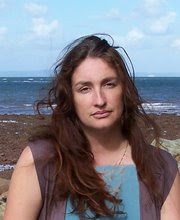
Photo from: Married Saints and Blesseds: Throughout the Centuries.

In my second posting on mental prayer I want to share with you the story of a beautiful family who lived last century in Austria. The story comes from the book, Married Saints and Blesseds: Through the Centuries. (I highly recommend this book.) Hedwig and Ernst Kronsteiner were both holy parents but I want to focus on Hedwig. One of their priest sons went on to write a book “Eine Metture und elf Kinder” (A Mother and her 11 children) it is in it’s fifth edition but unfortunately it is not in English.

Both Hedwig and Ernst came from anti-clerical, liberal families but despite this they both came to a deep realization of God and His goodness before they entered marriage. Hedwig impresses me deeply, she lived for God and her family, it never altered, she lived this until her last day on earth. Mental prayer was a fundamental part of her life and the fruits born from this all through her life are very evident. I will quote from the book:

“During the years of marriage that they spent together, the mother took the lead in religious matters, deliberately bringing her husband and children along with her into her world of faith and prayer. She led a life of prayer that was extraordinarily deep. Her prayer life followed a fixed order of an almost monastic sort; she not only said her daily prayers, as was her duty, but, despite her many chores, she recited her Rosary, spent an hour in meditation, and attended Holy Mass each and every day. Moreover, Mother Kronstiner knew very well how to turn the entire day, with its toils and worries, its work and its cares on behalf of a large family, into a prayer through a “good intention”, which she formulated as follows: “You have to do everything for the love of God; anything else is worth nothing!”

I think her words above reflect her generous time in mental prayer each day, understanding mental prayer to be conversing with God in love. The grace from her "conversation with God" flowed over to the rest of her 23hours in the day – “everything for the love of God, anything else is worth nothing!” The lifetime fruit of this mental prayer was eleven children, eight who were called to the religious life. Isn’t that astounding?

I’ll continue to quote again: “This mother raised her children with astonishing wisdom and generous freedom, in keeping, nonetheless, with the twofold principle: “The children don’t belong to me, they belong to God!”, and “Anything rather than a moral sin!”

Here are her eleven children:

Anna – Sister Cecilia of the Sisters of Saint Elizabeth, organist & choir director
Agnes – Sister Theresita of the Carmelite Monastery in Linz, cantor & organist
Hedwig – Sister Lucillia in the Missionary Congregation of the Holy Ghost Sisters.
Ernst – master clockmaker and director of a church choir.
Franz – Lay Brother in the Congregation of the Steyler Missionaries (working in Chile & Argentina)
Berthold – married, first a clockmaker then a policeman
Joseph – A priest in the diocese of Linz, a choirmaster and highly esteemed composer
Otto – married, a clockmaster as well as mayor for 15years of Losenstein.
Aloisia – Sister Elfriede of the Holy Ghost Sisters in Stockerau, organist
Hermann – priest of the diocese of Linz, professor of a music academy and composer.
Rudolf – he had entered the Benedictine Abbey in Seckau to become a monk but WW2 prevented him pursuing this vocation, missing in war.

And how did this faithful mother die? Her last words once again are a testimony to her faithfulness to mental prayer, as I quote for the last time:

“Hedwig Knonsteiner, got up early, at 4:00am, on April 19, 1940, as usual, and had her “conversation with God” in her customary one-hour morning meditation. At 7:00 am she took her missal to attend Mass, as usual, in the parish church in Losenstein and received Holy Communion, unaware that it was her Viaticum. (food for the journey) She spent the day as “Grandmother” in the company of her son Otto and his wife, Justina, and watching her little grandson Otto.

Around 8:00 pm she went with her husband – as she did every evening – into her bedroom to the family photo to bless her children and to pray for each of them. Then the husband and wife, as was their custom, each made the sign of the cross on the other’s forehead and prayed the prayer of consecration to the Sacred Heart of Jesus. After this, Frau Kronsteiner went again to the kitchen to make some final preparations. While there she had a fainting spell. After a time, her husband found her unconscious. They brought her to bed, called the doctor and the priest; the latter administered the Anointing of the Sick. At midnight, the courageous woman died in the peace of Christ, after managing to write down a sentence as a sort of testament: “Grant (O God) that I may love Thee always, and do with me what Thou wilt!”


Hedwig Kronsteiner, please pray for me!

Sunday, March 23, 2008

The Needle and the Golden Thread - Mental Prayer part 1

I've called this 'Part 1' only because I don't know how much I will write, so there will be more postings but I don't know how many, I'll just keep sharing my thoughts and recent discoveries until there is no more to say. This is not something I'm thoroughly experienced at - I hope to be, but I'm not - but I'm sharing the passion of my thoughts from spiritual reading and the recent living out of those ideas, that's all.

Mental Prayer. I have over the years, grown in the realisation that this is essential to a good life especially one where you have innocent souls looking more to what you do rather than what you say.

{Please Lord, can I go back 13 years? Things would be SOOO different. Old head, where were you when I had young shoulders?}

But it is certainly better late than never... "Never" How that word frightens me. No I will not let "never" haunt me in the autumn of my life. I have received my revelation. I will not fail by God's grace. God's grace. "Ask and you shall receive, knock and the door will be opened to you." Luke 11:9 In prayer and conversation with God each day, I must ask for the grace to do His will. What is that daily conversation called? Mental Prayer. Or meditation...

Do you know how long it has taken me to really understand what those simple words mean? The word 'meditation' is actually misleading, says Alphonsus. He says that meditation in the strict sense means thinking, reflecting and reasoning. So therefore, many tend to believe that meditation is a time to be spent in the exercising of their imaginations. St Aphonsus preferred to use the word, 'mental prayer' keeping thoughts at a minimum and prayers, petitions and affections from the heart, rich and abundant.

Mental prayer is the only sure way to God. Have you ever heard this famous saying? "Those who pray are surely saved and those who do not pray are surely lost." that was St Alphonsus Ligouri.

St Teresa of Avila said, "The devil knows that he has lost the soul that perseveringly practices mental prayer."

Alphonsus Ligouri also said, "Many say the Rosary, the Office, and perform works of devotion; yet still continue in sin. But mental prayer and sin cannot exist together." (Though the Rosary that is properly meditated upon IS mental prayer, but how many persevere in that depth of meditation upon the mysteries?)

I want to share with you some more sayings of Saint Alphonsus on mental prayer:

"The first means to love Jesus Christ, is mental prayer."

"Mental prayer is a familiar conversation and union with God, and consists not so much in thinking as in making affections, petitions and resolutions."

"If God does not bestow His graces upon us, the fault is ours; it is because we do not ask them of Him. All mental prayer should consist in acts and petitions."

"Remember that the devil labours hard to disturb us in the time of meditation, in order to make us abandon it. Let him who omits mental prayer on account of distractions be persuaded that he gives delight to the devil."

"In going to meditation, never propose to yourself your own pleasure and satisfaction, but only to please God, and to learn what He wishes you to do."


When I first started to put aside the first 15-30mins of my day in mental prayer I quickly fell into the wrong perception of what mental prayer really is. I have since learnt that it is a common mistake. I thought that I needed to find a lovely quote from the Bible or from a religious commentary and really think and ponder upon it. I found in time that it wasn't easy...I'd soon run out of 'thoughts' and need to find another quote to think upon.

So this lead to the habit of reading too much. I was searching for 'thoughts' to grab me, so that I could think more, but often it would take a bit of reading to find that particular prevoking passage. It sort of turned into spiritual reading...in the end I was burnt out by my confusion. It took time to find nice passages and something told me deep down that too much reading wasn't really mental prayer...

Recently I was given a wonderful little informal booklet, titled: "Method of Mental Prayer of St Alphonsus Ligouri" It is short, brief BUT ENLIGHTENING. I've read about Mental Prayer before, long tracts and books on it. But it didn't sink in. I'm a very visual person and if you give me an analogy, I'll probably get it. This booklet gave me a hum-dinger of an analogy - The Needle and the Golden Thread.

What is the needle? The thinking of God, the reflection of Him and His goodness, often using some passage or sentence to inspire them.

What is the golden thread? This is the spontaneous prayer, which comes after short reflection and it can be with or without words.

I'll go on to quote from the booklet:

"The progress of the soul does not consist in thinking much of God, but loving Him ardently."

In mental prayer we apply the needle swiftly, not pausing too long on it (thinking of God) It is the slow drawing of the golden thread (conversation with God) that is the real power of mental prayer.

Quoting the booklet again:

"To help your mind, read a text of Scripture or a short Meditation out of a book. St Teresa used a book in her Meditations for seventeen years. Meditate for a few minutes on any thought that has struck you; that is think for a short time on what it means, what lessons it teaches you, and ask yourself: What have I done about this hitherto? What shall I now do? But remember, you think only in order that you may pray.

The great benefit of Mental Prayer consists less in meditation or thinking than in acts, prayers and resolutions, which are the fruits of Meditation. The thinking is the needle which draws after it the golden thread of acts, prayers and resolutions. The thread is more important than the needle. "

We deftly apply the needle, we slowly draw the golden thread.

I look back on my attempts at mental prayer and see myself now as stalling over the application of the needle, to the point of pricking my finger upon it and finally giving up, sad and sore. (just my visual analogy for past attempts) I was hardly drawing the thread through! I'd run out of time and put down my 'tapestry of prayer' - lots of pin holes, not much thread woven into the fabric, in otherwords, with hardly anything to show...