Showing posts with label music. Show all posts

Tuesday, September 2, 2008

Chant, food for mind, soul AND body!

I have been a part of a Gregorian Chant choir now for over 5 years and I love it! My two older children also belong and are learning the chant, it has been a big part of my life in the home and in the church.

Chant in the home is wonderful background music for a peaceful schooling atmosphere, it has been the ideal music for bring a child into the world...that lovely ebb and flow..

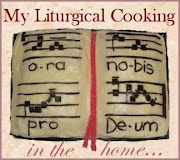
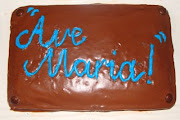
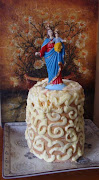
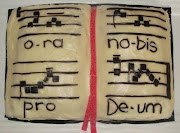
So with St Gregory the Great's feast day almost upon us, I have made a Gregorian Chant Cake, follow the link over to Catholic Cuisine and read how I made it!

Monday, December 3, 2007

Advent/Christmas Music to Soothe the Soul

Image Source

I have to confess, I do not have a big collection but the two I have, I really, really LOVE.


It would be nice to add a CD per season and if I were to look for another, definately a gregorian chant CD with specific Advent/Christmas Chants would be what I'd like.

Here the the two I can really recommend and I think I've tried to give links that enable you to hear a little of each track, I've given an Australian and US link for these CD's as well.

THE BIRTH OF JESUS - John Michael Talbot


John is a very well known music artist and this CD is quite spectacular, it is a CD that I'd like to play mainly in the later part of Advent as Christmas draws closer and closer.

(can listen to the tracks here)

- this price is HALF PRICE, so great buying!


CELTIC CHRISTMAS - Eden's Bridge

This hauntingly beautiful CD is just so meditative and soul-touching. I have just started to play it this morning, good to school with, having it as gentle, soothing background music. It is a CD that you will never tire of hearing.

(listen to the tracks here)

(listen to the tracks here)
- this is where I first purchased my copy many years ago...

Do you have any favourites to share? Please leave them in my comments box, I'd love to check them out!

Saturday, July 21, 2007

Hymn to the Precious Blood


From pg 8 of The Precious Blood & Mother manual
is this hymn to the Precious Blood, it would make
lovely copywork in the month of the Precious Blood.

Hymn to the Precious Blood

Glory to Thee, Glory to Thee.
O Blood of our Saviour,
We adore evermore, we adore evermore,
Blood of the Eucharist and Calvary.

Thou, O Jesus, art my portion,
Here on earth, and after above.
To Thy Blood I bring the homage
Of my heart and all my love.
I’ll live, O Jesus, for Thy glory.
Immolating all to Thee,
Thy cross, Thy Eucharist divine,
Have alone sweet charms for me.

From Thy wounds, all torn and bleeding,
I behold a painful sight,
Crimson Blood-drops ever flowing,
Pleading love both day and night.
It flows, yet sinners, so ungrateful,
Mock its pains with laughing jeers,
At least Virgins whom Thou lovest,
With Thy Blood shall mingle tears.

Come infuse the grace and fervor,
That should fill my heart for Thee;
A deep love, that never seeketh,
Save Thy cross its joy to be.
And when the guilty world forgets Thee,
Heedless of Thy Blood Divine,
My God, with seraphic ardor,
Come inflame this heart of mine.

If by pain and immolation
I could see the sinner rest
Safe within Thine arms paternal,
This reward would be the best.
While in this weary land of exile
My sole joy is found near Thee,
With Thy Grace and Blood so Precious
I await eternity.

The above is a translation of “Gloire au Sang.”
The favourite hymn of the Holy Foundress,
Mother Catherine Aurelia (foundress of the Sister
Adorers of the Precious Blood.)

Saturday, July 14, 2007

St Fortunatus would just LOVE this....


(If this is the very first medieval posting you are reading, please do not read on, but go to the posting before this one, as this is a two part series in sequence...)

Meet my St Forunatus pig...(that is my pet name for this fellow) He had me facinated throughout most of the day as we passed back and forth ("Not ANOTHER photo of it?!" my dh kept saying..) and so I took a few photos of him slowly being roasted in preparation for a feast that night amongst the re-enactors living the medieval life down to the last pig's bristle in the tooth, honey mead in the goblet and deer's skin as a cosy night coverlet...

So why exactly, do I call it "my St Forunatus pig?"

Well firstly I'll give you a link to this saint's life.

And secondly, my Cooking with the Saints book (a great book on liturgical eating in the home) says the traditional food for his feast (14th December) is a suckling pig and the appealing picture in the cook book has the little roasted pig relaxing on a platter with two cherry tomatoes in his eyes and an apple in his mouth...no, I'm not joking and yes, quite a sight!!

Here we are 9.30am and my little pig looks juicy and succulent, sizzling away in the sunlight...but he has many hours to go, the knight informs me he will ready in time for their private feasting at 6pm that night..."hmmmmm, no tidbits for me, we will be chanting over at the chapel...and we are definately not singing for our suppers!"

Afternoon rolls around and he's still going, "I wonder what is in the pots?" Never got round to asking them...

Our final glance, we are almost finished for the day and heading over to the chapel, he looks done and I sure hope they enjoyed him.

Makes me think of a childhood memory, way, way back. Celebrating an aunties birthday and they had a pig on a spit...it was pretty facinating to me then and have never forgotten that fabulous night. Nothing like a spit to make the celebration extra festive.

I said to dh, "Can we cook a pig for St Fortunatus' feast?"

Well, all I will say is that we don't share the same love for little pigs on spits, no matter WHO it is in honor of....

"I wonder what they hope to cook here for the evening? Sure looks authentic..."

As we head over to the chapel there are little fires, spits, roasts and smoke everywhere, such a medieval atmosphere. I really do not want to leave, the fun is only just beginning....

One of the children ran up and said, "Their cooking a pair of coneys!"

"Where have I heard that expression before?" (Just a bit of the LOTR fan coming out in me..)

We're backtracking a bit now into the day to the jousting, always one of the highlights of the festival but we turned up late and I find myself behind these bars and peeping around and over heads...

Look at this fellow, they like to create a formidable sight (to their fellow jousters) and a dashing look, (to the fair damsels and ladies.)

I mean, just look at the black 'love heart' shaped plumes....it is sure to send a fluttering of silken hankies being thrown his way.

I think this jouster's get up looks the fanciest, lucky to get this shot, that is a monk's head in front of me nearly obscuring my view.

"Charge!!!"

This fellow got hit in the head and his 'squire' is trying to dislodge a piece of his opponent's lance from his visor...certainly a dangerous sport!!!

That draws to mind some story from long ago about a saint that predicted the death of a king during jousting. (In punishment for his sins?) The king laughed because his armour was so protective but he got hit in the visor and pierced him through the eye and died days later....does anyone know what I am talking about? I just can't quite place the story.....love to know the full facts again.

(Jackie has given the correct story on this, in the 'comments section' - thank you Jackie!)

Here is my medieval 'fighting' monk. (He assures me they had them and that he is one..)

And here is my St George-loving 4 year old who thinks he has met the saint of his dreams!!!!

We are getting ready to process in for our afternoon recital. This year it was Marian chants, it was really lovely - I LOVE Marian chants!!!


Here we go, ds carrying the processional cross and my two dd's with little bells in hand. We are just about to sing, "Christus Vincit" as we process into the chapel.

So are you wondering if I am going to mention the connection between roasted pigs and chanting? (well I have to admit, it is a very obscure connection...)

When I was reading about the life of St Fortunatus in whom the roast pig is eaten in his honor, I discovered that he had composed some of my very favourite chants!!!! I cannot believe this, I've only discovered it while writing these posts!

I'll quote from the link I had given at the beginning of this post:

"The best of his talents were stimulated by the arrival at Poitiers in 569 of relics of the True Cross, sent by the Emperor Justin II, which was the occasion for his fine hymn ‘Vexilla regis prodeunt’ (‘The royal banners forward go’), used in the liturgy of Passiontide and especially Good Friday. At about the same time he composed ‘Pange lingua gloriosi’ (‘Sing, my tongue, the glorious battle’), likewise for Passiontide and ‘Salve festa dies’ for Easter. These are all generally reckoned to be among the finest examples of Christian hymnody, combining as they do classical skill and Christian religious sentiment to a high degree."

Vexilla Regis Prodeuent a simply rousing and powerful chant that I am told would often be chanted when going into battle as well as for liturgical feasts.

And Salve Festa Dies (click to hear the beautiful tune of the refrain.)

Here is the translation of it:

"Hail, festal day, venerable of all ages. By which God conquers hell and holds the stars."

This is also one of my favourites, it is an Easter chant and it certainly has that lovely, joyfulness that all Easter chants/hymns have!

Thank you St Fortunatus!

And finally, here we are, by candlelight chanting the Requiem chants (it was the 7.7.07 and my father's 7th anniversary of his death, I was so pleased to chant them in his memory) and finishing with compline.

Compline is always finished with Salve Regina. And as a lovely old Irish monk once told our choir master, "It is a lovely thing to have, " (In his Irish brogue) '..Virgo Maria' as the last parting words on your lips each night." (as the monastic silence continues then till the next morning) ...and never a truer word said!

Wednesday, June 27, 2007

Feast of Our Lady of Perpetual Succour


Today was the beautiful feast of Our Lady of Perpetual Succour. I have a very ‘old’ love for this image. It is probably the most familiar image of Our Lady to me as I was growing up (besides the Immaculate Heart of Mary.)

When we were living in the country Victorian town of Benalla, St Joseph’s had a weekly holy hour in honor of Our Lady of Perpetual Succour and my childlike love grew from those weekly devotions. Many of the beautiful hymns to Our Lady I learnt there, “I’ll Sing a Hymn to Mary” “Mother of Christ” and the sorrowfully beautiful, “Mother of Perpetual Succour.” When you learn them in childhood, you never forget the tunes, you often can sing many verses from heart even if you haven’t heard them in many years...

There was always petition time during the hour where the petitions were read from the pulpit and I have to confess that my petitions featured strongly. As I made quick visits during the week (my school was next door to the church) it meant that I would usually not leave, until I had placed a petition.

When I was expecting my oldest, I would pray and beg my mother’s heavenly intercession in front of this image. Asking for answers to all my needs and fears as an approaching new mother and she did not let me down! A little miracle was granted, is all I can say, the day my boy was born.

My darling little 2year boy, fractured his arm yesterday afternoon and you would rather suffer their agonies for them...I know you will all understand what I mean there. Today we were just grateful for the things that could have happened but didn’t and I had been anticipating this beautiful feast, hoping to do something special. So I decided to buy a beautiful caramel mud cake. The exact colour of the distinctive background of this ancient picture. The children were so excited!


This beautiful picture hangs in our bedroom and draped around it always, is my Mexican rebozo. (Brought it as a birthing aid, but yet to use it..) Rebozos are used by mothers to wrap their young in and of course it makes me think of the most beautiful motherly words in the world, “Are you not in the folding of my mantle, in the crossing of my arms?”

I wanted to finish with the words to the beautiful hymn I had mentioned, I have also put a recording of the first verse so you can hear the tune. It is a lovely hymn to learn! It would also make beautiful copywork for the feastday.

Mary, from Thy sacred image,
With those eyes so sadly sweet,
Mother of Perpetual Succour!
See us kneeling at Thy feet.
In Thine arms Thy Child Thou bearest
Source of all Thy joy and woe;
What Thy bliss, how deep Thy sorrows,
Mother, Thou alone canst know.

On Thy face He is not gazing,
Nor on us is turned His glance
For His anxious look He fixes
On the Cross, the Reed, and Lance.
To Thy hand His hands are clinging
As a child would cling in fear
Of that vision of the torments
Of His Passion drawing near.

And for Him Thine eyes are pleading
While to us they look and cry;
Sinners spare my Child! your Saviour,
seek not still to crucify
Yes, we hear Thy words, sweet Mother
But, poor sinners we are weak;
At Thy feet Thy helpless children,
Thy Perpetual Succour seek.

Succour us when clouds of sadness
Hide the light of heaven above
Hope expires and faith scarce lingers,
And we dare not think we love.
In that hour of gloom and peril
Show to us Thy radiant face,
Smiling down from Thy loved image
Rays of cheering light and grace.

Succour us when stormy passions
Sudden rise within the heart;
Quell the tempest, calm the billows,
Peace secure to us impart.
Through this life of weary exile,
Succour us in every need;
And when death shall come to free us,
Succour us, ah! then indeed.


I had to add this darling little picture, these two can down the hallway just before dressed with whatever they could find....Jesus, Mary and Joseph I place all my trust in you!


Sunday, June 24, 2007

Feast of St John the Baptist and Guido's Hand


Today is the feast day of St John the Baptist, a great saint of the Church. We are celebrating his birthday on the 24th of June.

He has another feast day in the Church Calendar, on the 29th of August we remember his death, his beheading. Both his birth and death are mentioned in the New Testament. The readings and psalms of today’s Mass (Is 49:1-6; Acts 13:22-26; Lk 1:57-66, 80) are beautiful. We are all reminded that we are formed in secret in our mother’s womb:

“Already You knew my soul,
my body held no secret from You
when I was being fashioned in secret
and moulded in the depths of the earth.”


Of course we are first aquainted with St John in his mother’s womb, when he jumped with joy. Newadvent.org reminds us of this beautiful fact:

"And it came to pass, that when Elizabeth heard the salutation of Mary, the infant" -- filled, like the mother, with the Holy Ghost -- "leaped for joy in her womb", as if to acknowledge the presence of his Lord. Then was accomplished the prophetic utterance of the angel that the child should "be filled with the Holy Ghost even from his mother's womb". Now as the presence of any sin whatever is incompatible with the indwelling of the Holy Ghost in the soul, it follows that at this moment John was cleansed from the stain of original sin.”


This also impresses upon us that Mary, the mother of God had to be conceived without sin, when we witness in scripture the removal of the stain of original sin from John the Baptist, six months after his conception.

I was reading my copy of Cooking for Christ, a lovely liturgical cookbook that Jenn had personally tracked down for me last year. It is as wonderful book as Jenn tells us! On the pages dedicated to St John the Baptist’s feast it mentions this interesting custom:

“Singing groups in the northern countries would go from door to door much like Christmas carollers only on this day they sang:

“Ut queant laxis resonare fibris (Do-re)
Mira gestorum famuli tuorum (Mi-fa)
Solve poluti labei reatum (Sol-la)
Sancte Johannes.” (Si)

“As thy sevants sing with full voice the marvels of thy works, do thou purify their sinful lips Saint John.” And as the hymn mounted the scale from Do to Si, the housewife of Latvia would rush rush to the door with her hands full of bread and cheese while her husband stood in the background holding a mug of beer with which to lure in the singers.”

I belong to a Gregorian Chant choir, Schola Cantorum. Our choir master often runs a couple of workshops each year and this is the first point discussed, which is always such a great fascination to the participants, not realizing that this wonderful saint’s hymn has given us the basis of the Sol-fa and the foundation for modern Western music!


When I first joined choir, I had no musical theory background at all BUT I had watched Sound of Music many, many times in my childhood. And so for most people, that is how they make any connection to the Sol-fa. I am so thankful for that movie, it gave me my own ‘base’ in which to build an understanding of the chant notation as I was learning it.


Information on Guido's Hand

So how did Saint John’s hymn give us famous medieval teaching aid, the Sol-far?

Well, I will quote directly from my choir master’s workshop sheet:

“It was all thanks to a famous teacher of music, Guido d’Aezzo who lived in the eleventh century. He worked at the Benedictine monastery of Pomposa, Italy. One of his teaching aids for beginners was the hymn in honour of St John the Baptist, Ut queant laxis. Guido had noticed that each of the first six phrases of this tune begins on a new note of the rising major scale, so you hear in sequence – and remember – the sounds DOH – RAY – ME – FAH – SOH – LAH. The ‘DOH’ used to be called ‘UT’ and this is the clue to the Latin syllables used for the not names; they came originally from the beginning of each line of the first verse of St John’s hymn:

So that we may freely sing
Thy marvellous deeds,
Cleanse thy servants’ lips
From all stains of guilt
O blessed John.”


Cooking for Christ book had also given the translation, slightly different use of words, but same meaning.

Listen here - Ut queant laxis.

So when you think of music as we know it, think of St John the Baptist!