Monday, February 23, 2009

The Jesus Tree for Lent

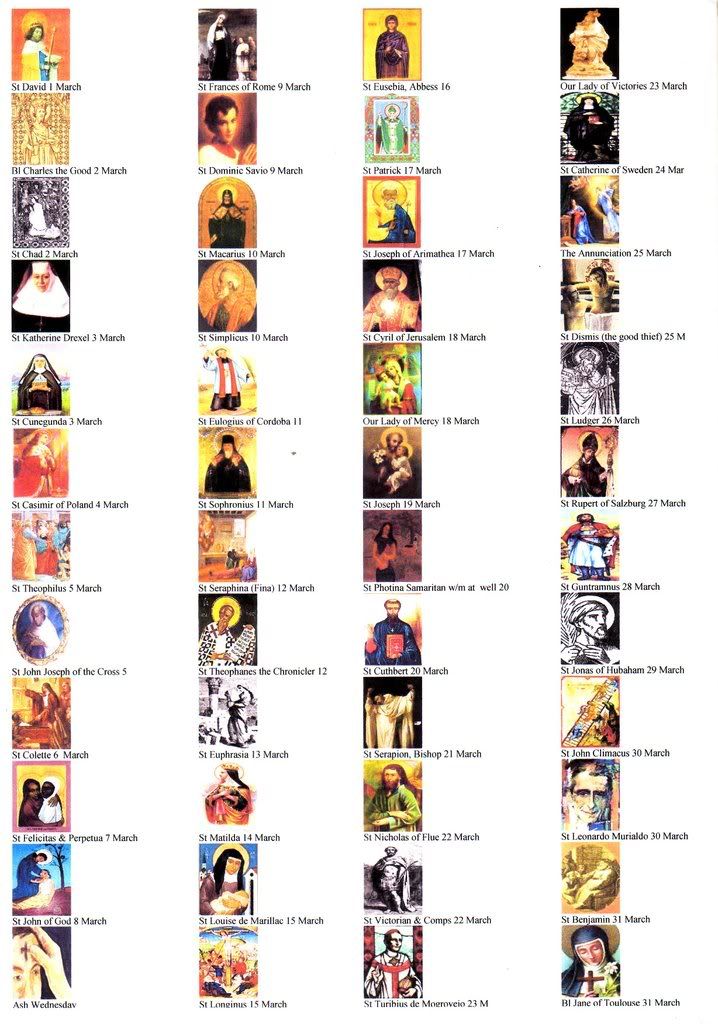
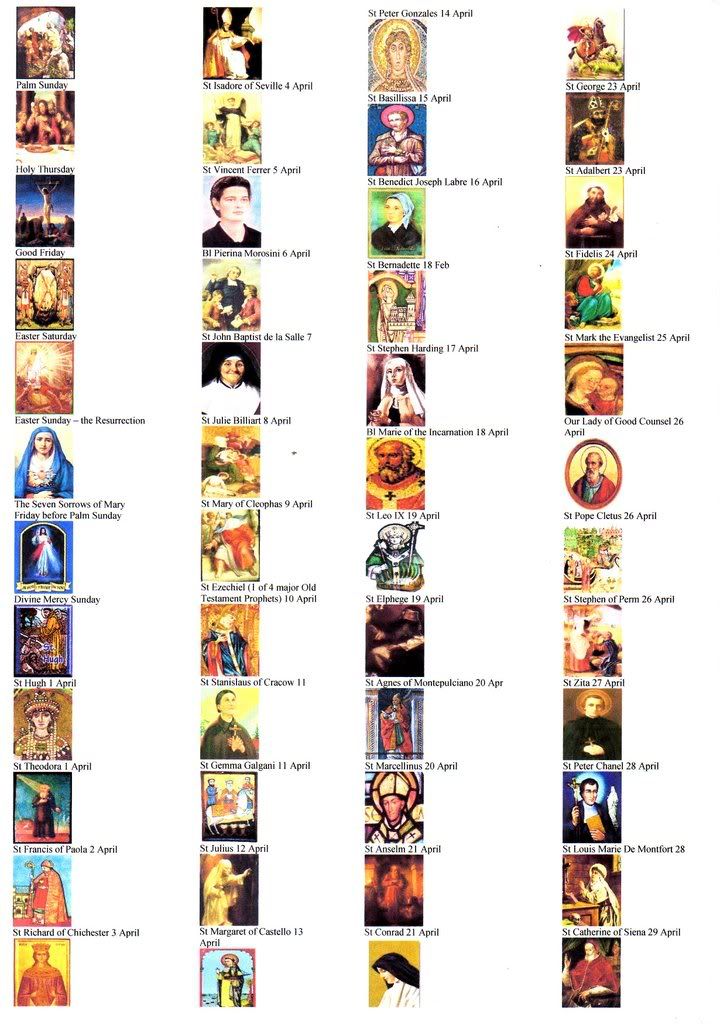
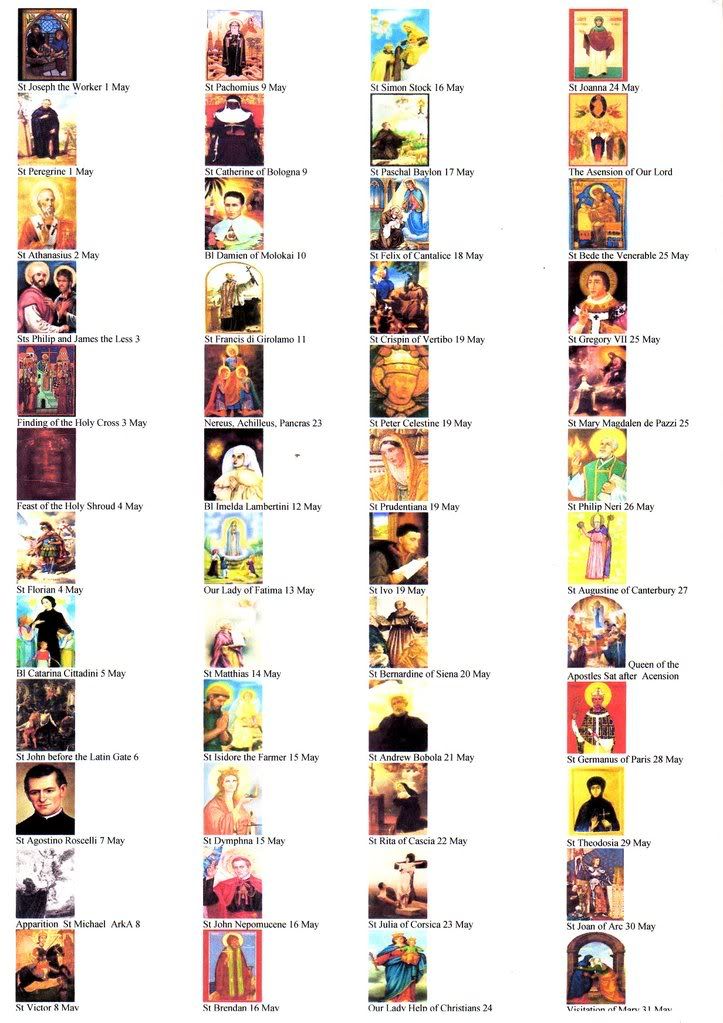
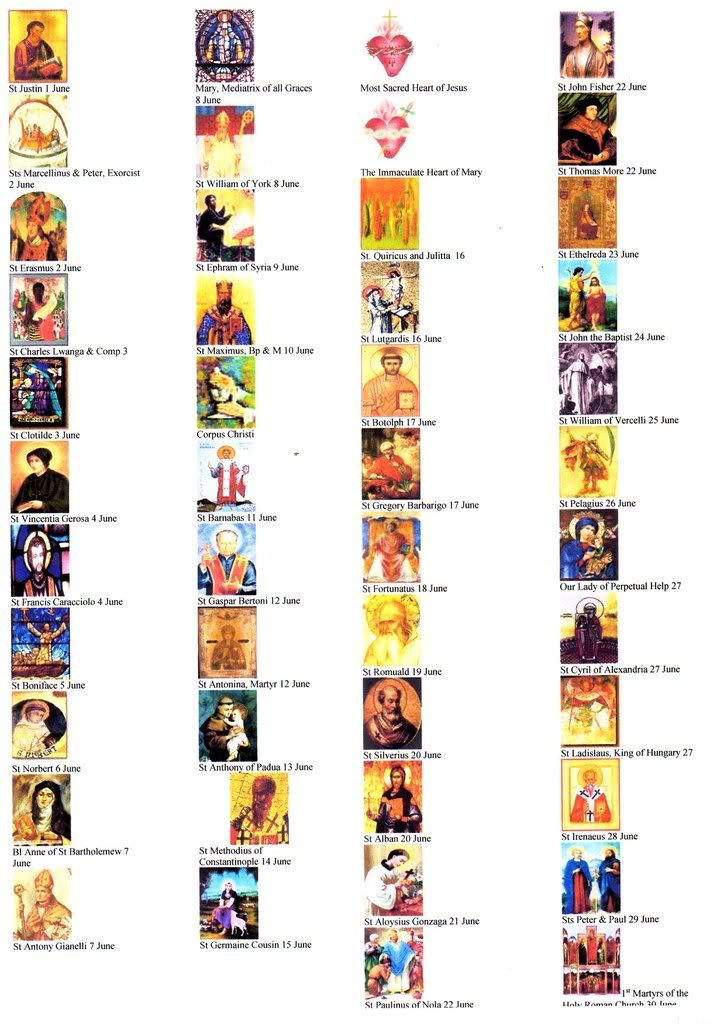
I have been HUGHLY inspired by Jessica over at Shower of Roses with her Jesus Tree. Jessica has gone to alot of effort to showcase this beautiful, lenten craft.

I won't explain how I've done this but instead, follow the link above to see all Jessica's close up photos of the images for each day, including the scripture readings, colouring pages etc. Thank you so much Jessica for generously sharing for the benefit of others!

The links to each week's images and references are in the right hand side bar on the Jesus Tree link above.

I should add that mine is a little different (tree shape), I haven't used the kit but visited my local discount fabric shop and was fortunate to find some great off cuts. My purple banner, is quite big 94cm x 145cm (or 37 inch x 57 inch) Why so big? Because that was the size of the off cut I found! Some lovely, thick suede in purple.

The brown material for the tree has this lovely bark-like pattern on it, costing me $1.50. I bought an assortment of coloured felts. Also, I glued braid all around the outline of the tree...yes, that would be about 16metres, a BIG job. I bought press studs, to sew onto the panel and the back of the felt images in order to attach them firmly.

As you can see from the image below, I'm still sewing on those press studs, with some of the bottom images still only pinned into place.

This is an impressive craft and activity.

It's delightfully visual, the colours vivid against the sombre, lenten colours in the backdrop.

When lent begins this tree will be bare and each day an image will be added, the symbol discussed, the corresponding Bible story read aloud and picture, coloured in.

The readings can be taken from Fr Lovasik's New Catholic Picture Bible.

Also while shopping at our fabric store, I found a few big pieces of this material above - furniture fabric off-cuts, with one side in purple (for lent), turn over to the other side and it is yellow (for easter) So we will be decorating our altar for lent with this fabric, using the purple side. When easter finally comes, I'll reverse it for the joyous time of the resurrection!


Sunday, February 22, 2009

Why say the rosary?

I saw this lovely video over at Cause of Our Joy. Leticia recommends we pass it on, so I'm doing just that.

Lent is only a few days away, so a perfect opportunity to add this devotion to your daily life.


Sunday, February 15, 2009

Cleaning teeth with Terramin Clay

Lately, the discussion of teeth and tooth care has come up at 4Real and I had mentioned that in our family we have finally all switched over to using Terramin Clay for brushing our teeth daily instead of toothpaste.

Terramin Clay, due to it's remineralization and detoxification benefits, aids in strengthening teeth (remineralization) and healing gum disease (removal of toxic wastes, namely, bacteria.) Unfortunately, we were using it spasmodicly due to storage issues in the bathroom, so we kept abandoning it.

Well, finally in the last few weeks we have it sorted. I had some lovely, small sized Tupperware containers that fitted perfectly between our new toothbrush holders, as you can see in the photo above. I have one container for the children and one for my husband and I. You need to make sure that the brushes have been cleaned under running water before dipping them lightly into the clay, it only needs to be a little clay on the brush. When the children have finished brushing, I get them to spit once, but not to rinse their mouths with water, so that the clay residue stays in the mouth and continues working on the teeth, particularly in the nighttime brush, so there is still some clay in the mouth overnight.

Ran Knishnisky wrote in The Clay Cure, "the clay is absorbent, so it will not be abrasive, and it helps harden teeth enamel while it aids in gum tissue repair. Furthermore, if used regularly, it helps to prevent gum recession." The reason gum disease develops is the bacteria build up around the teeth. When brushing with Terrmain Clay it binds the bacteria to the clay particles and is removed.


Terramin Clay and it's ability to heal or prevent gum disease is well known. I have known of two cases personally where this has worked. Firstly my mother - she is someone who will not eat unless she can brush her teeth within 15mins afterwards. So if she goes on a long trip and forgets her toothbrush, she will not eat until she returns home. She has been like that since she was 18, no one can accuse her of not doing the very best with her teeth!

A few years back in one of her 6 monthly dental checkups she was horrified when informed the early beginnings of gum disease was present. This was the same diagnosis at the following 6monthly checkup. Three months before her third checkup, she started on the clay, not to brush her teeth with but drinking it in water, twice a day, a tsp each time. When she went for her next checkup the dentist informed her that her gums were fine again. My mother knew it was the clay that was the only different thing in her life.

The second case is a lady who had mentioned a relative had serious gum disease and had been told that all his teeth had to be removed because of it. She was looking for any possible product that might help in a last minute effort to stop the loss of teeth. I mentioned the clay and it's benefits with teeth. The lady bought the clay off me (as I was at the time, an Australian distributor) and said she would get her relative to try it. I didn't hear from her until a year later when I received an email from her. She said that she was wanting to buy more and that a friend was also interested - the reason? - the clay had completely reversed her relative's gum disease, as advanced as it was, and the teeth were saved.

I have at present a friend who is trying it, she wears a plate in her mouth and where the wires are rubbing against a tooth, she has a badly recessed gumline. She has used it only for a few weeks and already it has closed in by half, she has high hopes it will completely resolve in time.

So you would think with all those personal stories I would have used it faithfully with the family all these years...the trouble is, the practial issues of storage and how to use it in a sanitary manner are all important in a big, busy family and so life can pass by and you realise you are not using it daily.

Our family have had alot of dental work in the last few weeks, it is a big wake up call to us. One child has particularly chalky teeth which need to be seen by the dentist 3 monthly from now on. So we have become faithful to the use of the clay now that we have the practical issues sorted, I will definately update again if we find that our teeth have improved with our new regime.

I just had to add one of the funniest dentists skits I know, Tim Conway (a practising Catholic BTW) is brilliant, so have a good laugh!


Friday, February 13, 2009

St Hildegard von Bingen and women's herbs


Here is an excellent article written by J Jamison Starbuck ND, who is a naturopathic physician in family practice and a lecturer at the University of Montana, both in Missoula. She is past president of the American Association of Naturopathic Physicians and a contributing editor to The Alternative Advisor: The Complete Guide to Natural Therapies and Alternative Treatments.

7 Herbs for Women

"Like billowing clouds, Like the incessant gurgle of the brook The longing of the spirit can never be stilled."

- Hildegard von Bingen

In an unfortunate reversal of historic convention, most modern women are now starved for trustworthy healthcare information, and for recapturing an active role in their families', and their own, health.

Prior to the mid-20th century, women, throughout time, have tended to the health needs of families, children, other women, and whole villages. In their roles as the keepers of medical wisdom, women have relied on science, natural history, observation, experience, and tradition.

The role of healer was naturally assumed by women; such healers included biological mothers, neighborhood "grandmothers," village elders, and renowned physicians and herbalists. The role of medical "expert" served to empower women, to bestow self-esteem, and to grant an automatic place of authority in family and culture.

One of my favorite women healers is Hildegard von Bingen, a multi-faceted woman who lived during the 12th century. Born in Germany in 1098, the lOth child of a noble family, Hildegard was tithed, as per medieval custom, to the church at birth. At age 8, she was sent to a Benedictine nunnery where she spent her days in a tiny room, studying under the tutelage of a female ascetic named Jetta. When Hildegard was 38, Jetta died, leaving Hildegard to become the head of the convent that had grown up around Jetta.

At 42, Hildegard began to have visions, described as "a blinding light of exceptional brilliance flowing through her brain." The then-Pope, Eugenius, encouraged Hildegard to transcribe these visions and to distribute her writings. In the highly religious Europe of the Middle Ages, Hildegard became a famous woman.

Hildegard was also a composer of music, a playwright, and the author of several books, among them Liber Subtilatum, "The Book of Subtleties of the Diverse Nature of Things." Hildegard studied plants, trees, animals, birds, and human behavior. Liber Subtilatum was a treatise on natural history and the therapeutic powers of natural substances.

Hildegard's views stemmed from the Greek four-element theory, a concept which is based on: fire, air, water, and earth. These elements correspond to four respective qualities: heat, dryness, moisture, and cold, and to four respective humors: choler (choleric), blood (sanguine), phlegm (phlegmatic), and black bile (melancholy).

As with other medical practitioners of her time, Hildegard believed that illness stemmed from an imbalance in humors and elements; prescribing the plant, animal, or natural substance which would correct the imbalance was the way to restore health.

Centuries later, Maude Grieve added her version of female wisdom to herbal history with a book entitled A Modern Herbal. For anyone interested in plant medicine and cultural history, this book is a great read.

Grieve clearly loves and respects the plant world; her book, published in England, in 1910, is more than a perfunctory listing of botanical names and their medicinal values. Through funny stories, poetry, Shakespeare, and history, Grieve relates information on over 100 botanical species: their history, cultivation, and culinary and medicinal uses.

Modern-day "representations" of Hildegard von Bingen and Maude Grieve came into my life during my four years of medical school. During the 1980s, Cascade Anderson Geller and Selena Heron taught botanical medicine at each of the two naturopathic medical schools I attended. Since work as a licensed naturopathic physician requires a comfortable familiarity with plants, "herb walks" with either Cascade or Selena were a prerequisite to graduation.

These strolls through the woods and mountains of the Pacific Northwest were unlike any hike I had ever before experienced. Rain or shine (and, in the Northwest, mostly rain) we would set out, tiny plastic bags and small knives in hand. Like contemporary Hildegards, these women would point out, sniff, nibble on, and tell stories about almost every plant we encountered.


We rubbed up against nettles to experience the sting, then chewed plantain leaves and rubbed them onto the rash to observe a cure. We sampled dandelion root, split open juniper berries, touched mullein leaves, and pressed St. John's wort flowers between our fingers to see them stain red. With these women, I learned the "magic" of plant medicine, and, through them, the healing powers of the natural world became real.

Unfortunately, for most women, the past 50 years has been a steady robbing of the traditional role of woman as healer. Modern medicine, pharmaceuticals, surgery, and highly technological procedures have convinced many that the solutions to illness lie outside of ourselves or are beyond the ken of the women we know.

Today, when a baby is due, few parents call a neighborhood midwife; when a child is sick, mothers rarely open kitchen cabinets to brew up the indicated medicine; when menopause begins, only a smattering of women look inward, or to one another, for solutions to hot flashes, depression, or a declining libido.

The pattern, instead, has been to search for answers in a surgical procedure or in eradicating symptoms with a pill - most notably, for women, with estrogen. This drug, derived quite often from the urine of pregnant, often illkept, horses, has been prescribed by physicians with astonishing frequency to treat women with everything from adolescent uterine pain to menopausal hot flashes in the middle-age years to heart disease in the elderly.

In the past months, estrogen, as a medicinal solution, has found itself on shaky ground. To start with, studies have linked the drug with an increased incidence of cancer. In August 1998, the Journal of the American Medical Association published a study concluding that estrogen was not helpful in reducing heart attacks, angina, strokes, and cardiovascular and other vascular-related diseases in menopausal women. In fact, in this study of 2,763 women who had pre-existing heart disease, those who took estrogen/progestin replacement had a higher rate of blood-clotting episodes and gallbladder disease than did those taking a placebo.

Women are rejecting the faulty model which holds the various stages of menopause to be "a disease," which needs to be "treated." Women recognize that there are natural changes which occur, some of which are more tolerable than others. The less-tolerable symptoms can be gently reduced by herbal and dietary approaches.

No more `pharmaceutical shock-treatment.'

More than at any previous time, women are, rightfully, desperate for natural alternatives to what BN's editor, James Gormley, calls the "pharmaceutical shock-treatment of choice": hormone replacement therapy/estrogen replacement therapy.

The `hormone therapy' shock-treatment predisposes women to:

1) increased incidence of breast cancer;
2) increased incidence of ovarian cancer;
3) increased incidence of thromboembolic episodes, like stroke and heart attacks;
4) increased incidence of uterine fibroids;
5) irregular bleeding;
6) PMS-like symptoms;
7) increased incidence of migraine headaches.

With such a stalwart agent of women's healthcare now suspect, women are forced to make alternate choices. In realizing that pharmaceuticals do not hold all the answers, women may decide to reclaim their inherent wisdom about the body and about healing.

While no one advocates a return to "primitive" medical practices, many women recognize that the natural world does, in fact, offer safe and effective methods for achieving health. One of these methods is herbal medicine.

Herbs of choice for women's health needs

1. Black cohosh (Cimicifuga racemosa) was first used in the United States in the mid-1800s, introduced by John King, an Eclectic physician and author. Extracts made from the dried root of this herb were used to treat the cramps and rheumatic back pain common to the first few days of menstruation. Recent research has found that black cohosh acts as a phytoestrogen (botanical with estrogen-like properties), which has proved effective in relieving hot flashes and vaginal dryness, and potentially blocking the entry of undesirable estrogens into sensitive cell membranes. In some menopausal women, black cohosh also has the very nice effect of livening up a waning libido.

2. Red clover (Trifolium pratense) is rich in phytoestrogens, including formononetin and coumestrol, which is among the most powerful of the plant estrogens. Red clover has been shown to relieve hot flashes and menstrual cramps, and to alleviate ovarian cysts. Like black cohosh, red clover has been reported to improve libido in some menopausal women. According to a September 2nd, 1998, conversation with James Duke, Ph.D., since this herb's plant estrogens are so concentrated, women should take care with dosage, and pregnant/lactating women should completely avoid it.

3. Dong quai (Angelica sinensis) is an Asian herb, long popular in Traditional Chinese Medicine for use in the treatment of hot flashes, fatigue, insomnia, and headache commonly associated with menopause. Dong quai is viewed by some as a blood nourisher; studies show the herb inhibits platelet aggregation (clumping), making it useful in pre-menopausal women with scant menstrual flow, cramping, or vaginal pain. For this same reason, though, dong quai should not be used by women with heavy menstruation or fibroids, or by those who have circulatory disorders.
4. Chaste tree berry ( Vitex agnus-castus) has what some herbalists refer to as an adaptogenic, or "normalizing," effect on the female menstrual cycle. Literature indicates that chaste tree berry increases luteinizing hormone and decreases follicle-stimulating hormone, a shift which indirectly results in greater progesterone production. Vitex can, therefore, be helpful in progesterone deficiency symptoms such as pre-menstrual syndrome (PMS), premenstrual acne, herpes, and water-retention.

5. Hawthorn (Crataegus oxyacantha) is a plant which cannot be left out of any discussion of botanicals for women's health Though not strictly a female herb, hawthorn is invaluable in the treatment of heart disease, a condition which afflicts millions of women, and is the number-one killer, above breast cancer, among women. Hawthorn acts by dilating coronary blood flow, resulting in greater tone in the heart muscle, and a decrease in heart abnormalities, such as arrhythmia and angina. Many menopausal women experience heart palpitations; long-term use of tonifying amounts of hawthorn extract can reduce these worrisome symptoms.

6. Lady's mantle (Alchemilla vulgaris) has a history of use for excessive menstrual bleeding. Rich in astringent tannins -- plant constituents known for their ability to reduce blood flow Lady's mantle is best used during the second half of the menstrual cycle.

7. Shepherd's purse (Capsella bursa-pastoris) is also useful in staunching excessive menstrual blood flow, especially in cases of uterine fibroids. While Capsella will not reduce the size of a fibroid, it can be effectively used acutely, during the menstrual period, to decrease the flow of blood. Note: in general, all herbs, particularly the herbs mentioned above, should be completely avoided by pregnant women, and, in most cases, by lactating women.

Hildegard's legacy.

Hildegard von Bingen died in 1179 at the age of 81. This year, 1998, marked her 900th birthday, and a time of celebration of this extraordinary woman in world history. Her music is available on compact disc; concerts commemorating her birth have been performed in various places, including Lincoln Center, in New York City; and a barrage of books, and even a film about Hildegard, have become available in the past decade.

Perhaps Hildegard's remarkable popularity heralds yet another change in the course of history; as women the world over honor the 900th birthday of this early female herbalist, they will again come to trust the healing wisdom of the natural world.

Thursday, February 12, 2009

Elderberry Syrup and Tincture

HT: Morguefile.com

Time to creative with health...this time, elderberries.

HT: Respect your Elderberries

I never knew what elderberries were until a few months ago. Truly. It would seem that the revered elderberry is far more widely known and used in the States than Australia. What a shame for us down under.

It was thanks to a few threads over at 4Real and one in particular, that brought this berry and it's health-giving properties to light for me. Firstly I searched the Australian net to see what was for sale..there were a couple of bottles of syrup but not much else.

So I decided I'd make it myself. I've made a bottle of syrup and a bottle of tincture, well in advance of our flu season but that is a good thing..the tincture in particular, needs time to develop it's potency, I have it marked out on my wall calendar in fact, end of April before I sift out the elderberry pips/pulp from my tincture.

HT: Bulk Herb Store

I bought my berries dry. I am in the process of equiring an elderberry plant but it will be a few years off before anything can be harvested so I will continue to buy dried berries in the meantime.

This is the recipe I chose to use to cook up the syrup, from Herbology in Australia. It is a recipe that is very natural - no sugar - just berries, water, honey and lemon juice. I soaked the dried berries in the boiling water overnight and then continued on with the recipe the next morning.

Here is a step by step tutorial with pictures!

Here is the syrup, ready to be strained (actually I poured this as is into my bottle first, tasted it and thought, 'this is too crunchy/pippy!" asked over at 4Real about it and was told...strain it!)

So that is what I'm doing here..straining it.

I couldn't bring myself to throw out the pips...and so I pose the question...what can you do with elderberry pips?

I cleaned up a 1.5litre wine bottle for the syrup. It is ready now to be stored in the fridge, ready for use.

I also made a tincture, about 150grams of dried elderberries place into a 750ml bottle of 40 proof vodka. I cleaned up a used apple cider vinegar bottle and sterlized it. I poured in the vodka and berries together.

I need to give it a good shake each day, for at least a month.

The apple cider vinegar bottles make great tincture bottles when empty.

The bottle is not the ideal, dark coloured glass, so I've put a bag over the top of it to keep out the light.

When I go looking for this elixir, I'll be giving it out in 1 tsp doses, 3 times daily.

You can strain the pips out or you can leave them, straining only what you go to drink, leaving the pips in the bottle...I think I'll probably leave them in.

We had a very sick season last year, there was alot of persistant illnesses around so we really hope to go into bat against these viruses with a bit more ammunition this time!

Elderberries with it's great anti-viral properties, makes it a good choice in a world where viruses cannot be stopped by much else.

Blessed salt and herb ginder

We have always bought 'herbal salt' instead of having a traditional salt and pepper shaker. The herbal salts contain finely ground seasoning herbs and sea salt. It is not cheap, usually $4 - 7 dollars depending on the brand bought, we would usually go through a bottle every two weeks.

A few days ago I made up my own mix of herbal salt. I bought the Himalayan crystal salt in bulk. I then took it to Father to have blessed. Blessed salt is a sacramental and can then be used for my salutary purposes including adding it to meals:

"A few grains in drinking water or used in cooking or as food seasoning often bring astonishing spiritual and physical benefits"

"As with the use of Sacraments, much depends on the faith and devotion of the person using salt or any sacramental. This faith must be Jesus-centered, as was the faith of the blind man in John 9; he had faith in Jesus, not in the mud and spittle used by Jesus to heal him."

I remember listening to Father Corapi, when he said he knew a friend who ran a drug rehabilitation center and added blessed salt to the food for all the recovering addicts - she knew well this was a battle against the devil at that point and this was the perfect use for this powerful church sacramental.

I keep this blessed salt and the grinder separate from all the normal pantry items, so that I am the only one (or dh) who uses it at meal times, seasoning each plate, rather than children helping themselves, willy-nilly.


I didn't buy an empty grinder, I bought one that already had seasoning in it, but I wasn't 100% happy with the indgredients since it contained chilli..and chilli tends to be a stomach irritant, whereas cayenne would be my choice of chilli-hot seasoning..

So I emptied the grinder and started to mix my own bowl of seasoning as you can see on the left, I used the following ingredients:

chunks of blessed salt
dried horsetail
dried stinging nettle
dried comfrey
dried hawthorn berries '

Actually, many of these herbs are blessed too, here is my post about the special feast day for it here.

You can make up any mix you like, using your favourite herbs, you can add other things as well, like dried pumpkin seeds, sunflower seeds, kelp (for iodine), sesame seeds, peppercorns if you like a bit of normal pepper (though it can be a stomach irritant as well)

Here is my herbal salt on our breakfast, eggs on sourdough toast, it was enjoyed by everyone!

This is certainly a great way to get good herbs into the family, in small but daily doses and save money on commercial preparations.

Wednesday, February 11, 2009

Feast of Our Lady of Lourdes

Happy and Blessed Feast Day to you all!

Today we went to Marian Valley for this special feast with a lovely blogging friend and her sweet daughter!

This time last year I had desperately wanted to go but I was feeling deathly weak, being in the grip of a nasty heart virus...I was bawling my eyes out and begging Our Lady to heal me in that 150th anniversary year.....here I am today, very well and very much recovered from any heart troubles or complaints, in otherwords, deeply grateful.

The night before I had tried my hand at making the blueberry muffins Jessica suggested over at Catholic Cuisine but I couldn't quite create the 'break open and ooze' look to them but everyone enjoyed them.

I even tried to make a batch with chocolate inside but they definately didn't ooze, so I'll have to re-think how I would do it next year... editing to add, I've found the right recipe for this, Carmel Easter Egg Muffins!

My children and my friend's daughter were part of the beautiful procession for the day. The shrine goes to alot of trouble to dress the children for this honour, they always have so much fun together.

Here they pass... my Faustina was so happy to have her best friend with her, a special treat!

This is a special photo and it was a scene that moved one particular lady that day. This lady came up to me later and said she had made some of the banners for the shrine, the one above - the St Michael banner, is one of them.

When she saw my friend's daughter carrying it, she remembered her own daughter from 18 years ago, one that she did not hold in her arms for long in this world, a little Down Syndrome girl.

It was the passing of her daughter that had brought this lady back to her faith....she'd had a dream that her daughter had come to her saying she was with Jesus...

To see this sweet and lovely girl carrying the banner she made, moved her greatly.

Look at them all! Aren't they too cute for themselves?? What a lovely bunch of children and all waiting patiently for the procession to start...

My Ambrose, holding onto that bell for dear life. He had the honoured roll of ringing for Our Lord.

Francis leading the Eucharistic procession to the Grotto of Our Lady of Lourdes.

The children process by, throwing petals and saying, "I adore you Jesus."

Winding their way to the beautiful nature-filled shrine.

Father, holding the monstrance and just been seen at the foot of Our Lady of Lourdes.

Processing back to the chapel for benediction.

Each year for this feast the Fathers have everyone come up for an individual blessing with Our Lord in the monstrance.

It is truly the highlight of the day.

Father had just given the most beautiful sermon on woundedness - all the different types - spiritual, emotional, physical. It had me thinking, I walked away edified and renewed in my need to pray for healing in all with faith and trust. He had asked us to ask God to heal our wounds as we received the individual blessing and to remember that Our Lady was standing by our sides with her hand on our shoulders (like in confirmation) asking for her Divine Son to intercede for us.

After the individual Eucharistic blessing, each person walked by my Francis and dipped their hand in the bowl of Lourdes water.

" Hey! Where are you off to, dear boy?? "

....off to have a good time, let me assure you!


My children have blogger names in honour of their confirmation saint, or the saint they love!

Tuesday, February 10, 2009

Have you a Grandma?

Continuing on with the book: St Anne, Grandmother of Our Saviour, Frances Keyes shares this article printed long ago in the Catholic View in Virginia USA:


Have you a Grandma? Here's an Idea for Tuesday.

"Do you still have a grandmother here on earth? If you do, you're lucky. Most of us who are a little older have long since lost our grandmothers - and now feel that loss keenly. But if your grandma is still around, why don't you figure out some especially nice surprise and then spring it on her this coming Tuesday? It will amaze her - naturally - when she sees you going out of your way to please her. And when she wants to know the reason why, you can explain that Tuesday is 'Grandmother's Day'. It's the feast of St Anne, the grandmother of Our Blessed Lord."

Then from the same book is a sermon preached by Rev Bernard Morisset, who enjoined his congregarion to consider St Anne in her role of a grandmother:

"It is this aspect of her personality that I wish to stress today," he said. "Grandmothers are educators of a very special kind. The experience of years, the courage which has been fortified through trial, the appeasement of violent passions, the necessity of adapting one's self to changing eras, the certainty that sunshine will always come after the storm: all these qualities give them a particular talent for dealing with children. Grandmothers have an art of their own; they are patient, gentle and long suffering when they take care of children and if they are sometimes inclined to soften parental discipline, they, nevertheless, get surprising results in controlling their small charges. Their method of education is efficacious; and what zeal they show when their grandchildren are sick and what prayers they offer when these cherished children do not always follow in the strait and narrow path! Really, grandmothers are so necessary to children they ought never to die!

My brothers, is St Anne not really the embodiment of the grandmother for all mankind, since Mary is the mother of all mankind? Think of the benefits attributed to her: she appeases Divine wrath, she heals the sick, she obtains the grace of conversion; and she is not only the grandmother who cares for our spiritual welfare, but who safeguards the well-being of the family household. The greatest grace which we can ask of St Anne is to preserve for these households the strength and the virtues which have characterized them in the past."
All I can add myself is, how beautiful and true those words are! As I watch my own mother help in the schooling my 6 year old boy in particular, I know this only too well. Of course, St Anne is 'the' perfect grandmother to us all, we are blessed indeed, especially if we call upon her!

Confirmation at Marian Valley

Here is my eldest daughter on her confirmation day (8 Feb 2009) I have decided in future on my blog I will refer to her by her confirmation name 'Faustina'.

Faustina had decided many, many years ago that she would take this name after she was told she had been baptised on Mercy Sunday (a movable feast) the year of her birth and had loved the read outloud of the lovely book The Young Life of Saint Maria Faustina.

Here we all are. I intend to give all my children online names - finally - using their confirmation saints name or a saint connected to them in some way.

Ds 14: Francis (his confirmation saint)

Dd 11: Faustina (her confirmation saint)

Dd 9: Therese (she already knows what her confirmation saint will be!)

Ds 6: George (he LOVES Saint George so we will use that until he is confirmed)

Ds 4: Ambrose (This dear boy was born on St Ambrose's feast)

Dd 1: Anna (She was baptised on Candlemas day and Anna the prophetess is mentioned in the bible on this feastday, also I was very much praying to St Anne before, during and after her birth, clinging to her, in fact!)

These two, sweet girls are best friends. They were both delighted when they realised they were going to be confirmed together, her friend took the name Lucy.

My darling girl who is growing so quickly. A girl that mothers everyone, who is always laughing and flashing those dimples, who loves her faith...a great blessing indeed.
Therese and Anna together.

Here is the veil that Faustina used for her First Holy Communion. The headpiece had been fashioned into two hearts - Sacred and Immaculate, the materials all originally come from my wedding dress, which I blogged about here.

Faustina's dress was picked up in a second hand sale for a couple of dollars, and yet it looked so beautiful, who would ever know? (Except everyone reading of course!!!)

My mother with George. A special bond is forming between the two as mum is schooling George this year, while I school the three older children. Mum has helped me with Therese like this too, just helps me take on the new child with a little more ease by teaching them some of the first year basics.

Here is the Bishop with all the confirmation children, proudly showing their certificates. It was a beautiful Mass and ceremony.

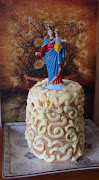
One of the homeschooling mothers made the confirmation cake, it looked lovely!


Father who is in charge of Marian Valley, has a bit of Scottish in him (he has a lovely little Maltese dog aptly named - Angus) and he plays the bagpipes with gusto. He was the pied piper this day, with hordes of children following him in the valley after this photo.

The Bishop and the children enjoyed a rather crowded buggy ride in the valley, the kids thought it terrific!
There are two of my boys, Francis and Ambrose, enjoying the ride...the ones with the 50's crew cuts!! (my speciality!)

George enjoyed the ride as well...it was a lovely finish to a beautiful day.